4 Things Jesus Taught About the End Times That Might Surprise You
Steve Shannon
November 29, 2025
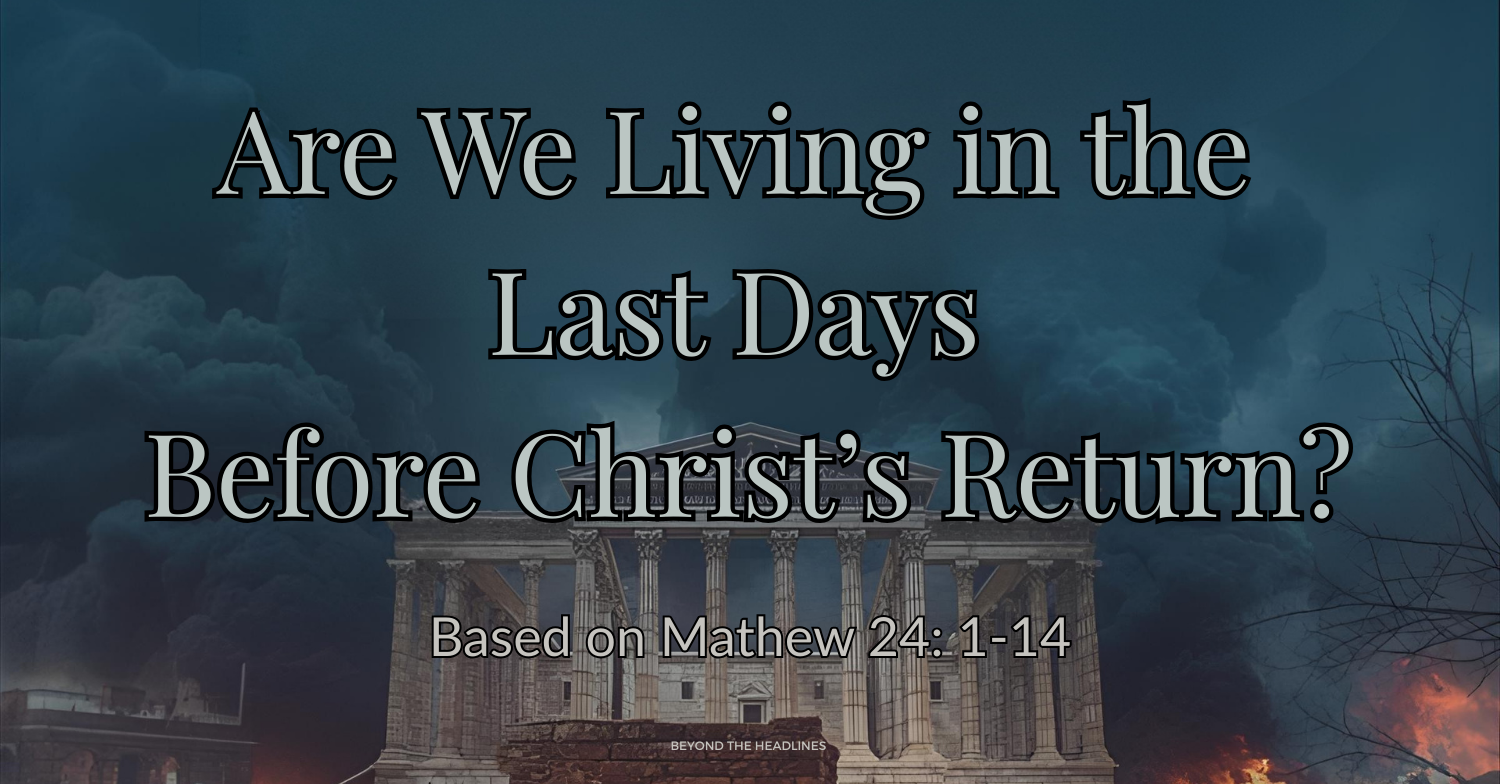
Beyond the Headlines
It’s easy to feel a sense of anxiety when we see chaotic world events unfold. Watching news of wars, instability, and natural disasters often leads to a familiar, pressing question: Are we living in the last days? It’s a question rooted in a deep desire to understand our times and what lies ahead.
This isn't a new question. Jesus's own disciples asked him the very same thing after he made a shocking prediction. As they left the magnificent temple in Jerusalem, he told them that the entire structure would one day be so completely destroyed that "not one stone will be left upon another." Stunned, they later asked him privately for a sign of his return and the end of the age. In response, he didn't offer a scary timeline or a secret code. Instead, he provided a framework to help his followers remain steady, alert, and full of hope—not fearful, confused, or caught off guard. Here are four surprising takeaways from his teaching in Matthew 24 that shift our perspective.
1. The "Signs" Are Just the Beginning of the Story
When the disciples asked Jesus for a sign, he listed a series of dramatic global events: wars and rumors of wars, famines, and earthquakes. Our natural tendency is to see these as definitive proof that the end is here. But Jesus immediately subverts their expectation, reframing these terrifying events not as the end, but as something else entirely.
Instead, he uses a crucial metaphor to explain their meaning:
“All these are the beginning of birth pains.”
Birth pains are not the birth itself. They are unmistakable signs that something significant is coming, but they also indicate that the main event has not yet arrived. This metaphor is powerful. Jesus wants his followers to understand that global instability doesn’t mean God has lost control. On the contrary, it means His plan is moving forward, just as he said it would.
2. The Greatest Pressure Will Be on Faith Itself
After discussing external world events, Jesus turned his attention to the pressures that would directly test the church from within. He warned that the most difficult challenges wouldn't necessarily come from global crises, but from spiritual ones. He foretold a time of persecution, where many believers would fall away, betray one another, and be deceived by false prophets.
End-time pressures don’t just challenge the world—they test the church. Perhaps the most sobering warning Jesus gives is about the spiritual climate that will characterize this era:
“…the love of most will grow cold.”
This is a startling prediction. It suggests one of the greatest dangers will be an internal chilling of the heart—a loss of fervent love for God and one another. But Jesus immediately follows this warning with a powerful promise for those who endure: “The one who stands firm to the end will be saved.” He makes it clear that perseverance through these internal tests is central to genuine faith.
3. It’s a Season of Opportunity, Not Retreat
Given the warnings of global turmoil and internal church pressures, it would be easy to conclude that the proper response is to hide, retreat, and simply wait for the end. But Jesus taught the exact opposite. He presented a powerful promise about the advance of the gospel, identifying it as the truly definitive sign before his return.
He declared:
“This gospel of the kingdom will be preached in the whole world… and then the end will come.”
This creates a stunning contrast. Jesus paints a picture of increasing darkness—but also increasing light. While the world faces instability and the church faces immense pressure, God’s mission will not fail. In fact, it will accelerate. This global mission, unfolding amidst global chaos, is precisely why Jesus's final instructions focus not on a timetable, but on the character of his followers.
4. The Mandate Is Preparation, Not Panic
So how should we live in light of these realities? Jesus’s primary instruction on how to respond to these world-altering events was simple and direct: "Do not be alarmed." The entire purpose of his teaching was not to generate fear, but to foster a specific kind of readiness.
This preparation isn’t about stockpiling supplies; it’s about spiritual fortitude. Jesus calls his followers to stay spiritually awake and alert, to stay grounded in the truth of Scripture to avoid deception, and to stay committed to the mission of the gospel. Followers of Christ are to be marked by a steady calmness, not an anxious reactivity.
Christians do not panic about the last days. We prepare. We persevere. And we stay faithful until Christ returns.
Conclusion: A Shift in Focus
Jesus’s teaching on the end times is ultimately a call to exchange our magnifying glass for a compass—to stop scrutinizing headlines for clues and to start navigating our lives with faithful perseverance. He replaces panic with preparation, anxiety with alertness, and retreat with mission.
This perspective raises a vital question for every believer today: How might our lives change if we viewed global instability not as a sign of God's absence, but as a confirmation that His plan is moving forward?